
2026-07-11 11:19:00
In modern manufacturing, robotic welding has become the backbone of industries such as automotive, heavy equipment, metal fabrication, and industrial machinery. A well-designed robotic welding system delivers consistent weld quality, improves production efficiency, and reduces labor costs. However, even the most advanced automation line can suffer from one costly issue—unexpected welding robot downtime.
Every minute a welding robot is out of service affects the entire production schedule. Delayed deliveries, increased labor costs, rework, and reduced Overall Equipment Effectiveness (OEE) can quickly impact profitability. While many manufacturers assume robot failures are the main cause, the reality is that most downtime results from preventable issues such as worn consumables, poor maintenance, improper fixtures, or inefficient process design.
Fortunately, these problems can be minimized with the right equipment and maintenance strategy. By combining reliable welding automation solutions with preventive maintenance and intelligent production planning, manufacturers can significantly increase equipment uptime and improve long-term productivity.
At Dayi Tech Equipment, we specialize in welding automation solutions designed to help manufacturers reduce downtime, improve welding quality, and maximize production efficiency. From intelligent cleaning systems to customized robotic workstations, our solutions support stable and continuous production for demanding industrial applications.
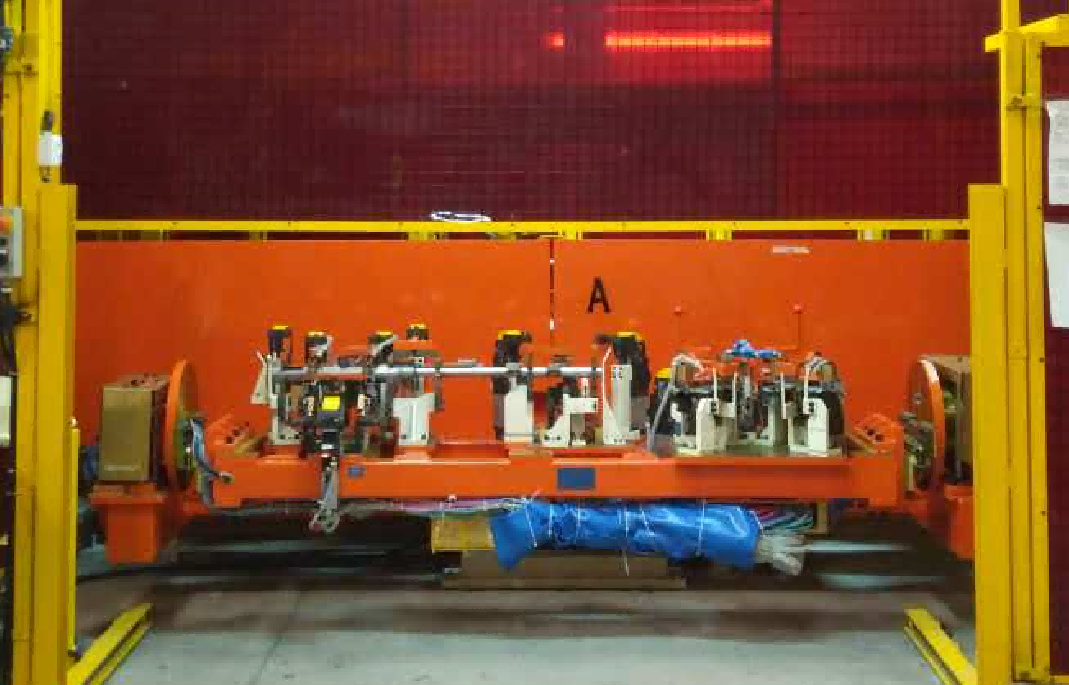
Explore our complete automation solutions here:
https://www.dayi-techequip.com/
Unlike manual welding, robotic welding operates as part of an integrated production line. When one robot stops, upstream and downstream processes are often affected at the same time. The result is much more than a simple equipment failure.
Common consequences include:
Production delays and missed delivery schedules
Higher labor and maintenance costs
Reduced equipment utilization
Lower welding consistency
Increased scrap and rework
Unexpected overtime expenses
For automotive manufacturers, where production lines operate around the clock, even a short interruption can result in significant financial losses. This is why reducing welding robot downtime has become a major priority for production managers and automation engineers.
Before solving the problem, manufacturers need to understand what causes downtime in the first place. Most issues are not related to the robot itself but to supporting equipment and production conditions.
During continuous welding, molten metal particles accumulate on the welding nozzle. Over time, this buildup restricts shielding gas flow, affects arc stability, and reduces weld quality.
If operators must frequently stop production to clean the torch manually, valuable production time is lost.
Installing an automatic welding gun cleaner allows the torch to be cleaned automatically during each production cycle. This not only reduces manual intervention but also helps maintain consistent welding performance throughout long production runs.
Contact tips and nozzles are consumable components that naturally wear over time. As they deteriorate, wire feeding becomes unstable, electrical conductivity decreases, and weld quality suffers.
Many factories still rely on manual replacement, requiring operators to stop the production line whenever a nozzle reaches the end of its service life.
An automatic nozzle changer can replace worn consumables quickly and accurately without unnecessary downtime, helping manufacturers maintain continuous production while extending equipment efficiency.
Even the most advanced robot cannot produce high-quality welds if workpieces are not positioned accurately.
An improperly designed welding fixture may cause:
Part misalignment
Dimensional variation
Robot path deviations
Repeated welding defects
Increased rework
High-precision fixtures ensure every component is positioned consistently, allowing the robot to perform identical welds throughout the production cycle.
Many manufacturers only perform maintenance after equipment fails. Unfortunately, reactive maintenance almost always results in longer downtime and higher repair costs.
A preventive maintenance schedule should include:
Daily visual inspections
Cleaning welding torches and sensors
Checking cable wear
Lubricating moving components
Inspecting gas supply systems
Replacing worn consumables before failure
Routine maintenance requires only a small investment of time but significantly reduces unexpected production interruptions.
Manual torch cleaning is slow, inconsistent, and dependent on operator experience. Automatic cleaning stations remove welding spatter in seconds, helping maintain stable shielding gas flow and improving weld quality throughout the production process.
For high-volume production lines, an automatic welding gun cleaner can save hundreds of maintenance hours each year while extending the service life of welding consumables.
Replacing worn nozzles before they fail prevents unexpected shutdowns and minimizes quality defects. Integrating an automatic nozzle changer into the robotic welding workstation enables fast and repeatable replacement with minimal operator involvement.
This solution is especially valuable for automotive manufacturers and high-volume production environments where every second of downtime affects overall productivity.
Reducing downtime is not just about selecting better robots. It requires optimizing the complete robotic welding workstation, including fixtures, consumables, cleaning systems, safety equipment, and production flow.
By designing each component to work together efficiently, manufacturers can reduce unnecessary stops, improve cycle times, and achieve higher production stability.
At Dayi Tech Equipment, our engineering team develops customized welding automation solutions based on each customer's production requirements, helping manufacturers build reliable, efficient, and scalable robotic welding systems.
Even when hardware is working properly, inefficient programming can increase cycle time and create unnecessary stops. Poor robot paths, excessive movement, or incorrect welding parameters may reduce production efficiency and increase the risk of defects.
Manufacturers should regularly review and optimize robot programs by focusing on:
Shortening unnecessary robot movements
Optimizing welding speed and current settings
Reducing collision risks
Improving robot path accuracy
Using offline programming for faster adjustments
A well-optimized program allows the robot to complete more work within the same production time while reducing mechanical stress and maintenance requirements.
Consumables such as contact tips, nozzles, liners, and electrodes directly influence welding stability. Low-quality consumables may wear faster, create unstable arcs, and increase the frequency of production interruptions.
For companies operating high-volume production lines, choosing reliable consumables is a simple but effective way to reduce maintenance frequency and improve welding consistency.
Combined with automated maintenance equipment, high-quality consumables help a robotic welding system achieve longer operating periods with fewer interruptions.
Modern factories increasingly use data monitoring systems to identify potential problems before they cause unexpected downtime.
Important performance indicators include:
Robot operating time
Welding cycle time
Consumable replacement frequency
Error frequency
Production output
By analyzing production data, engineers can identify hidden problems and make improvements before failures occur.
Predictive maintenance is becoming an important part of advanced welding automation because it allows manufacturers to move from reactive repairs to proactive optimization.
Although robotic welding reduces manual labor, skilled personnel are still essential for maintaining production stability.
Operators should understand:
Basic robot operation
Common alarm solutions
Consumable replacement procedures
Daily inspection methods
Safety requirements
Proper training allows teams to identify minor issues quickly before they develop into major production failures.
Choosing the right equipment supplier plays an important role in long-term production efficiency. A professional automation partner does not only provide machines but also offers engineering support, customization, installation guidance, and after-sales service.
Dayi Tech Equipment provides complete welding automation solutions, including:
Robotic welding workstation design
Automatic welding gun cleaning systems
Automatic nozzle changing solutions
Precision welding fixture development
Customized automotive welding automation projects
By combining advanced equipment with professional engineering experience, manufacturers can reduce downtime, improve production reliability, and achieve better return on investment.
Learn more about Dayi's welding automation solutions:
Welding Automation Solutions
For industries such as automotive manufacturing, electric vehicles, and industrial equipment, welding quality and production stability are critical. A small interruption in a production line can affect delivery schedules and customer satisfaction.
Dayi Tech Equipment focuses on solving these challenges through customized automation solutions. Instead of offering standard equipment only, Dayi works with customers to understand their production requirements, welding processes, and efficiency goals.
The company provides support from initial planning and equipment design to installation and technical service, helping customers create efficient and reliable production systems.
With professional experience in robotic welding applications, Dayi helps manufacturers achieve:
Higher production efficiency
More consistent welding quality
Reduced labor requirements
Lower maintenance costs
Improved production flexibility
The most common causes include welding spatter buildup, worn consumables, fixture problems, poor maintenance, programming issues, and unstable production conditions. Most downtime can be reduced through preventive maintenance and proper automation solutions.
A welding gun cleaner automatically removes spatter from the torch nozzle, reducing manual cleaning requirements and maintaining stable welding conditions. This helps improve welding consistency and extends consumable service life.
An automatic nozzle changer allows robots to replace worn components quickly without long production interruptions. It is especially useful for high-volume manufacturing where continuous operation is required.
A precision welding fixture ensures accurate positioning of workpieces, reducing alignment errors, improving weld consistency, and minimizing rework caused by incorrect part placement.
Yes. Robotic welding is widely used in automotive manufacturing because it provides high repeatability, stable quality, faster production speed, and improved workplace safety.
Maintenance frequency depends on production volume and operating conditions. Regular daily inspections combined with scheduled preventive maintenance can significantly reduce unexpected downtime.
Reducing welding robot downtime requires more than repairing equipment after failure. Manufacturers need a complete strategy that combines proper maintenance, optimized programming, reliable consumables, accurate fixtures, and advanced automation technology.
Solutions such as automatic welding gun cleaners, automatic nozzle changers, and customized robotic welding workstations help factories maintain stable production while improving efficiency and reducing operating costs.
As an experienced welding automation equipment provider, Dayi Tech Equipment is committed to helping global manufacturers create smarter, more reliable, and more efficient welding production lines.
Contact Dayi Tech Equipment today to discuss your welding automation requirements and discover the right solution for your production needs.
Official website:
Dayi Tech Equipment
Connect With Us


Phones: +86 136-0262-0678
Email: dayi-tech@dayi-techequip.com
Whatsapp: +86 136-0262-0678
ESP-B Factory Add: No.10,Yucai Road ,Dalingshan Town, Dongguan City, Guangdong Province, China 523820
Welding Equipment Factory Add: Xiaji 2nd Road, Xintang Town, Zengcheng District, Guangzhou City, Guangdong Province, China 511348
© 2026 Dongguan Dayi Technology Co., Ltd. All rights reserved.
Privacy Policy | Terms and Conditions