
2026-10-10 09:16:11
Automating an assembly line is one of the largest capital decisions a manufacturer makes. Done well, it raises output, stabilizes quality, and reduces dependence on manual labor. Done poorly, it creates a rigid system that cannot adapt to product changes. This guide covers how to evaluate and specify automated assembly equipment for industrial production.
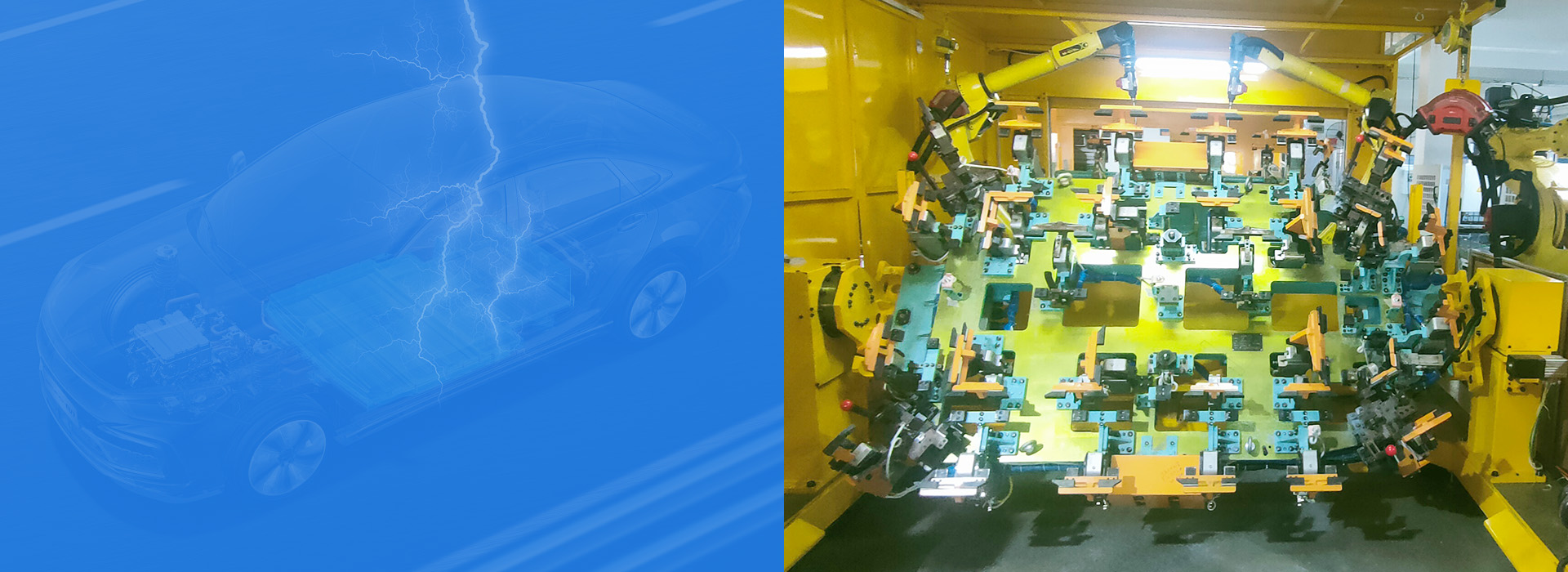
An automated assembly line is a production system where machines perform a sequence of assembly operations with limited or no manual intervention. Stations are linked by conveyors or transfer mechanisms, and each station completes one step before the part moves on.
Automation can be partial, where operators handle complex or flexible tasks while machines do repetitive or precise work, or full, where the line runs with minimal supervision.
Feeding and handling. Parts must arrive at each station in the correct orientation and at a steady rate. Vibratory feeders, trays, and robotic pick-and-place units are common solutions.
Process stations. These carry out the actual assembly work — fastening, welding, dispensing, pressing, or testing. Each station needs a fixture that holds the part repeatably.
Transfer system. Conveyors, indexing tables, or robotic arms move parts between stations. The transfer method sets the line's cycle time and flexibility.
Control and inspection. PLCs coordinate the stations, while vision systems or sensors verify each step so defects are caught before they move downstream.
Not every process benefits equally from automation. The best candidates share three traits: high and stable volume, repetitive motion, and strict quality requirements. Tasks that change frequently or demand fine judgment are usually left to operators.
A useful starting point is to map the current process and identify the bottlenecks, the stations with high defect rates, and the tasks that create safety risks. Those are the points where automation delivers the fastest return.
Volume and mix. High-volume, low-mix production justifies dedicated equipment. High-mix, low-volume production needs flexible automation with quick-change fixtures and programmable stations.
Cycle time target. The required output per hour determines the number of stations and the transfer speed. Cycle time should be based on realistic station times, not on ideal values.
Product lifecycle. If the product will change within a few years, prefer modular equipment that can be reconfigured rather than rebuilt.
Integration with existing equipment. New stations must fit the plant's layout, power, and control standards. Poor integration causes delays and hidden costs.
One frequent error is specifying equipment around today's product without planning for future variants. Another is underestimating the time needed to feed and orient parts — feeding is often the hardest part of an assembly cell to make reliable.
Manufacturers also tend to overlook testing. Adding inspection at each station costs more upfront but prevents defective assemblies from being built on, which is far more expensive to correct.
Automation succeeds when the mechanical and control sides are designed as one system. A robot cannot compensate for a fixture that holds the part loosely, and a precise fixture cannot fix an inconsistent transfer system. Designing fixtures, workstations, and controls together produces a line that is both accurate and robust.
Specifying an automated assembly line starts with understanding volume, mix, cycle time, and product lifecycle. Automate the repetitive, high-volume, and safety-critical steps first, keep the design modular so it can grow with the product, and plan for feeding and inspection from the beginning. Approached this way, automation becomes a durable asset rather than a constraint.
Working with a supplier that understands both fixtures and full workstations helps ensure every station of the line performs as part of a single, coordinated system.
Connect With Us


Phones: +86 136-0262-0678
Email: dayi-tech@dayi-techequip.com
Whatsapp: +86 136-0262-0678
ESP-B Factory Add: No.10,Yucai Road ,Dalingshan Town, Dongguan City, Guangdong Province, China 523820
Welding Equipment Factory Add: Xiaji 2nd Road, Xintang Town, Zengcheng District, Guangzhou City, Guangdong Province, China 511348
© 2026 Dongguan Dayi Technology Co., Ltd. All rights reserved.
Privacy Policy | Terms and Conditions